
 AI for peace
The most powerful technology of our time, put to work with the world's most effective peacebuilders: women.
Women leaders teach AI the warning signs. AI watches. Women confirm what's real, and funding reaches them within days to prevent large-scale violence and instability.
An initiative of Peace Pays
Violence is rising. So is the power of AI.
Armed conflict is at its highest level since records began. At the same time, AI is reshaping how information spreads, and too often it deepens division. We believe the same technology can help prevent violence, if the people closest to it shape how it is used. This is the moment to decide what AI is for.
Armed conflicts involving a state in 2024, the most since records began in 1946. The number has nearly doubled since 2010.1
People on Earth forced from their homes. That's 117.8 million people, nearly double the total a decade ago.2
The global cost of violence in 2024, about 11.6% of the world economy.3
Prevention works, and it works best locally
Acting early costs far less than responding late. Local leaders are often the ones who make it hold.
Share of residents reporting a recent violent incident in a randomized study of 88 communities in Nigeria. Where local leaders were trained in mediation, violence was reported nearly half as often.4
Every dollar invested in peacebuilding is estimated to cut the long-run cost of conflict by sixteen.5
More likely to last at least 15 years: peace agreements shaped with women's participation.6
Saved each year through prevention, according to a joint UN and World Bank study.7
From early signal to local action
- 1
Listen
Women leaders answer regular surveys. AI gathers local news, social media and public data.
- 2
Analyze
AI sorts what it finds against warning signs women helped define.
- 3
Validate
Women peacebuilders and local experts check what the AI flags.
- 4
Decide
The team weighs the risks, the options and the safeguards.
- 5
Act
Rapid grants go to local groups to respond.
- 6
Learn
Each case is tracked to its outcome, so the next warning is sharper.
AI does the heavy lifting. People make the calls.
Built with women peacebuilders, and for them
Women are the experts here. The system is built around what they know.
They shape it
Women decide what to watch for, how to read it and what response makes sense.
They're paid for it
We compensate women for their time and expertise, as we would any expert.
They use it
The data flows back to them, in forms they can use for their own prevention and peacebuilding.
They're protected
Taking part is voluntary and confidential, and we keep the burden light.
Starting in Colombia. Built to scale.
- Buenaventura, ColombiaUnderway
- Tumaco, ColombiaNext
- SudanOur next country
- Two to three more contextsOver the next three years
Our team
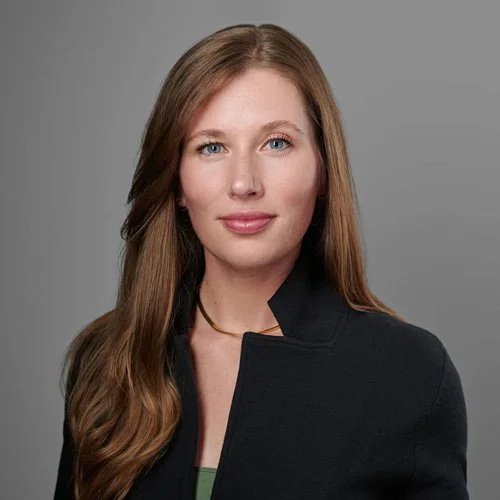
Jen Bradshaw
More than 20 years working on peace and security in conflict-affected places, including Colombia, Sudan, Ukraine, Guatemala, Yemen, Iraq and Afghanistan.
Full bio
Jen co-founded Peace Pays and leads Peace Signals. She previously served at the U.S. Department of State in the Secretary's Office of Global Women's Issues, where she built and managed the SHE WINS initiative and its Rapid Response Fund, getting fast, flexible funding to women peacebuilders in more than 20 countries.
She worked on Sudan for a number of years, including as part of the U.S. ceasefire negotiations and the ALPS process, working closely with Sudanese women peace leaders and grassroots civil society. Jen is a Rotary Peace Fellow at Uppsala University (2018).
Amanda Van Dort
Human rights and gender equality expert with over 15 years across the U.S. government, nonprofit, multilateral and academic sectors.
Full bio
Amanda J. Van Dort is a 2026 American Democracy and Technology Fellow at the McCain Institute, where her work focuses on countering foreign actors' use of gendered disinformation to undermine democratic trust in the United States. She also serves as an Adjunct Professor at Johns Hopkins University's School of Advanced International Studies and George Washington University's Elliott School of International Affairs, teaching courses on feminist statecraft, women and global politics, and gender and conflict.
Until 2025, Amanda served as Chief of Staff and Division Chief for Policy, Planning, and Public Diplomacy in the Secretary's Office of Global Women's Issues at the U.S. Department of State, where she led institutional reform efforts to integrate gender equality into policy and practice. In 2021, she helped stand up operations at the Dulles Expo Center and Marine Corps Base Quantico to support evacuated Afghans during Operation Allies Welcome. Previously, she was Policy Team Lead and Senior Advisor in the Bureau of Conflict and Stabilization Operations, where she managed U.S. government atrocity prevention efforts and advanced Women, Peace, and Security initiatives. As a Presidential Management Fellow, she worked on sexual and reproductive health and rights in the Bureau of Population, Refugees, and Migration and on adherence to international humanitarian law in the Office of the Secretary of Defense.
Before her government service, Amanda was a Harold W. Rosenthal Fellow with the International Organization for Migration in Geneva and Country Director for Emerge Global, a nonprofit supporting adolescent girl survivors of sexual assault and abuse in Sri Lanka. She holds a Master of Public Policy from the University of Michigan's Gerald R. Ford School of Public Policy and a Bachelor of Science from Eastern Michigan University's School of Health Sciences.

Jose Suarez
Over five years designing, managing and implementing peacebuilding initiatives globally, with a focus on gender, youth and interreligious dialogue.
Full bio
Jose has predominantly worked in the nonprofit sector managing global grants such as the SHE WINS Rapid Response Fund, which supported women-led organizations around the world responding to urgent needs and emerging opportunities in the Women, Peace and Security space. He has also supported fundraising, project management and implementation for peacebuilding nonprofits based in Colombia, Greece and the U.S.
Most recently, Jose served on the steering committee of the Colombian Youth, Peace, and Security coalition and co-wrote the monitoring section of Colombia's Youth, Peace, and Security National Action Plan. He holds a Master of Arts in International Peace and Conflict Resolution from American University's School of International Service, and a Bachelor of Arts in Religious Studies and International Relations from Calvin University.
David Pavlik
Bio coming soon.
Calee White
Works at the intersection of AI governance and gender, peace and security, supporting Peace Signals' expansion in Colombia.
Full bio
Calee White works at the intersection of AI governance and gender, peace and security. As the Peace Signals Fellow at Peace Pays, she supports the expansion of its early warning work in Colombia, along with fundraising, events, and communications.
Calee is also a Research Fellow with SPAR, examining how U.S. surveillance law shapes allied countries’ decisions on AI and data sovereignty, and which reforms could strengthen democratic leadership in AI. Previously, as a Research Scholar at the Georgetown Institute for Women, Peace and Security, she co-led multi-country research on technology-facilitated violence against women politicians and co-presented preliminary findings at the inaugural ACCAP Scholars Conference, supported by the U.S. Department of State. She also evaluated a federal gender-based violence consultation process for the Coalition for Adolescent Girls, co-authored published analysis on industry capture of regulatory processes at the Center for American Progress, and coordinated international election observation missions at the National Democratic Institute.
She holds a Master of Science in Foreign Service with a Certificate in Gender, Peace and Security from Georgetown University and a BA in Political Science and in Law, History, and Society from Vanderbilt University.
How partners can help
Funding to scale
Bring Peace Signals to more communities, starting with Sudan.
Community partnerships
Trusted local relationships and the safety of the women involved.
Technical expertise
Responsible AI, validation methods and links to existing early warning systems.
Learning
Independent evaluation and evidence of what works.
Better forecasts are not the goal. Earlier, safer prevention is.

Sources
- Uppsala Conflict Data Program and PRIO, "Sharp increase in conflicts and wars" (June 2025).
- UNHCR, Global Trends: Forced Displacement in 2025 (June 2026).
- Institute for Economics and Peace, Global Peace Index 2025.
- 3ie, "Can local peacebuilding work? Promising evidence from two new studies" (Mercy Corps program in North Central Nigeria).
- Institute for Economics and Peace, Measuring Peacebuilding Cost-Effectiveness.
- Laurel Stone, cited in UN Women, Global Study on the Implementation of UNSCR 1325 (2015).
- United Nations and World Bank, Pathways for Peace (2018).